Pavel Arsenyev.
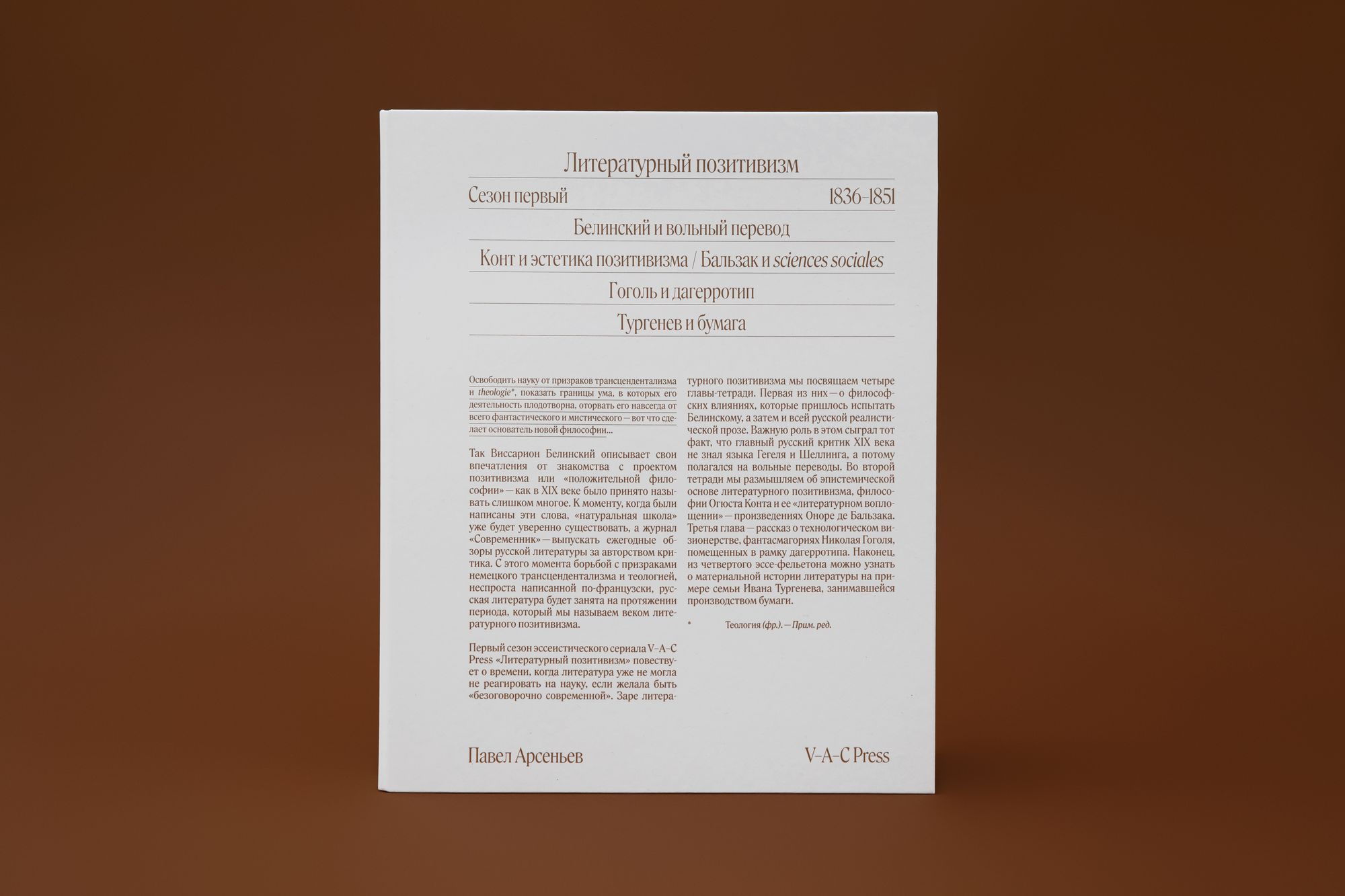
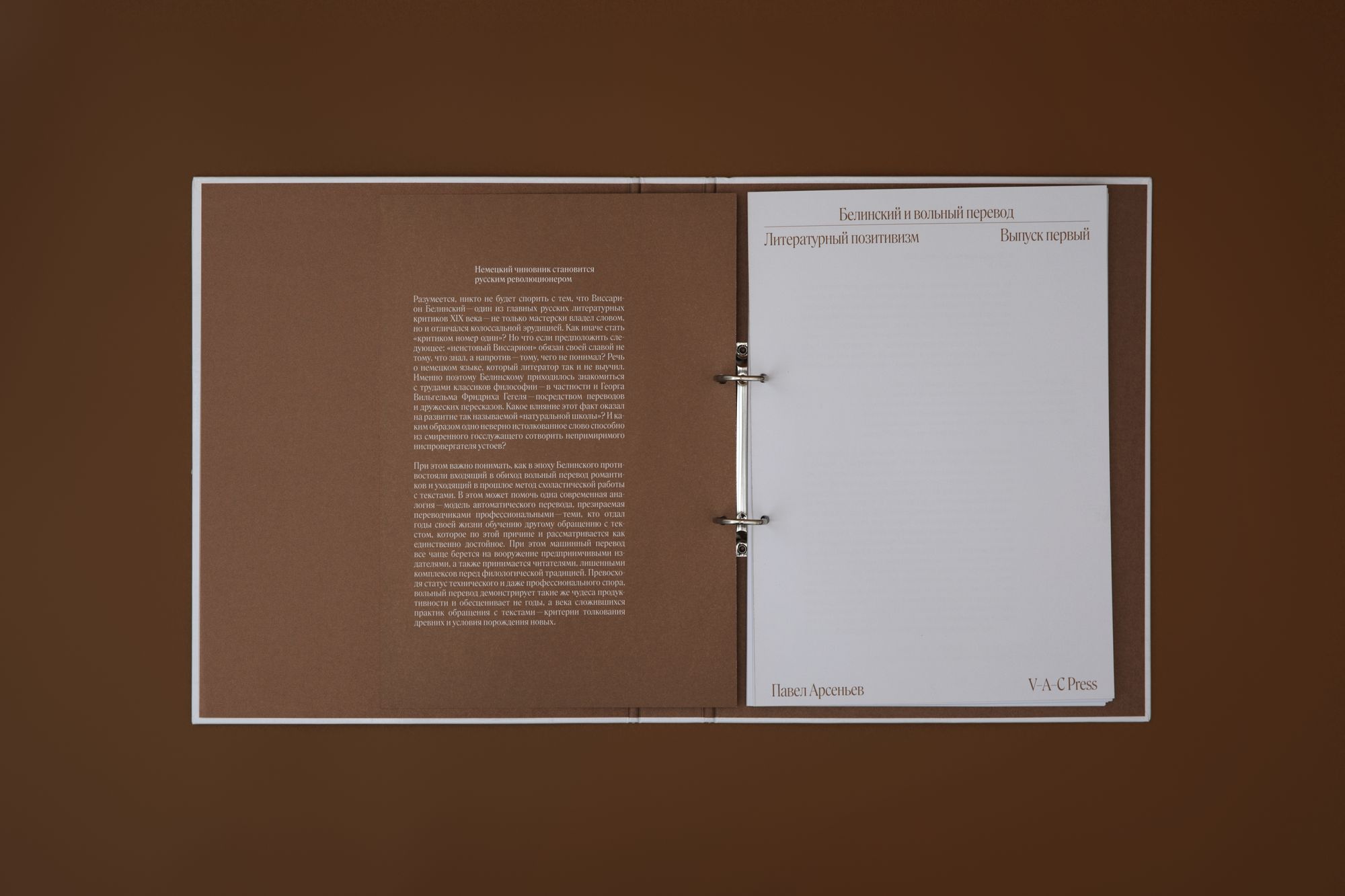
Literary Positivism. Season One: 1836–1851. Issue One: Belinsky and Free Translation
The first installment in an essayistic series, dedicated to Vissarion Belinsky.

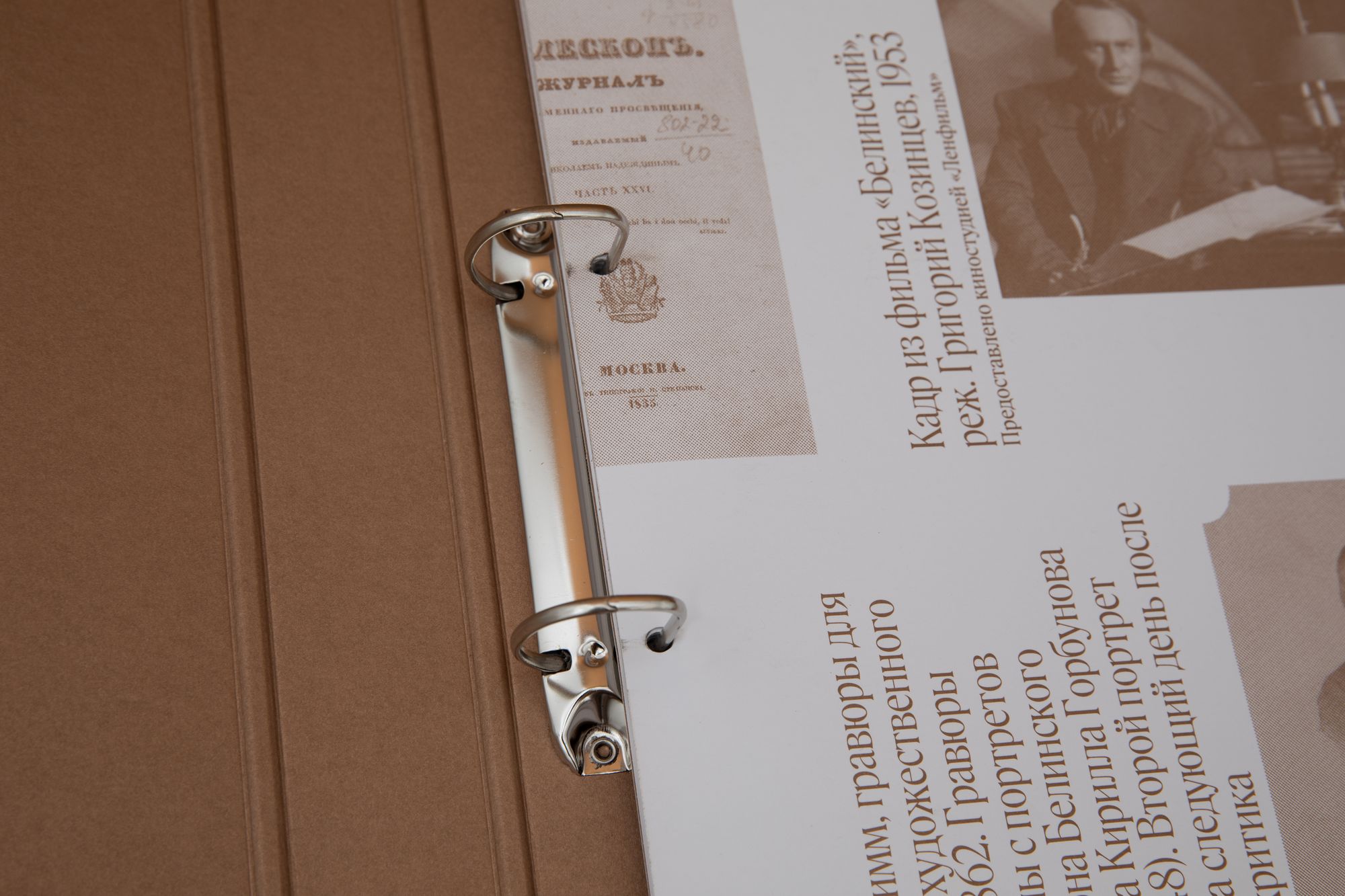
All photos: Ruslan Shavaleev
Pavel Arsenyev (b. 1986) is a poet and literary theorist and the recipient of the Andrei Bely Prize (2012).
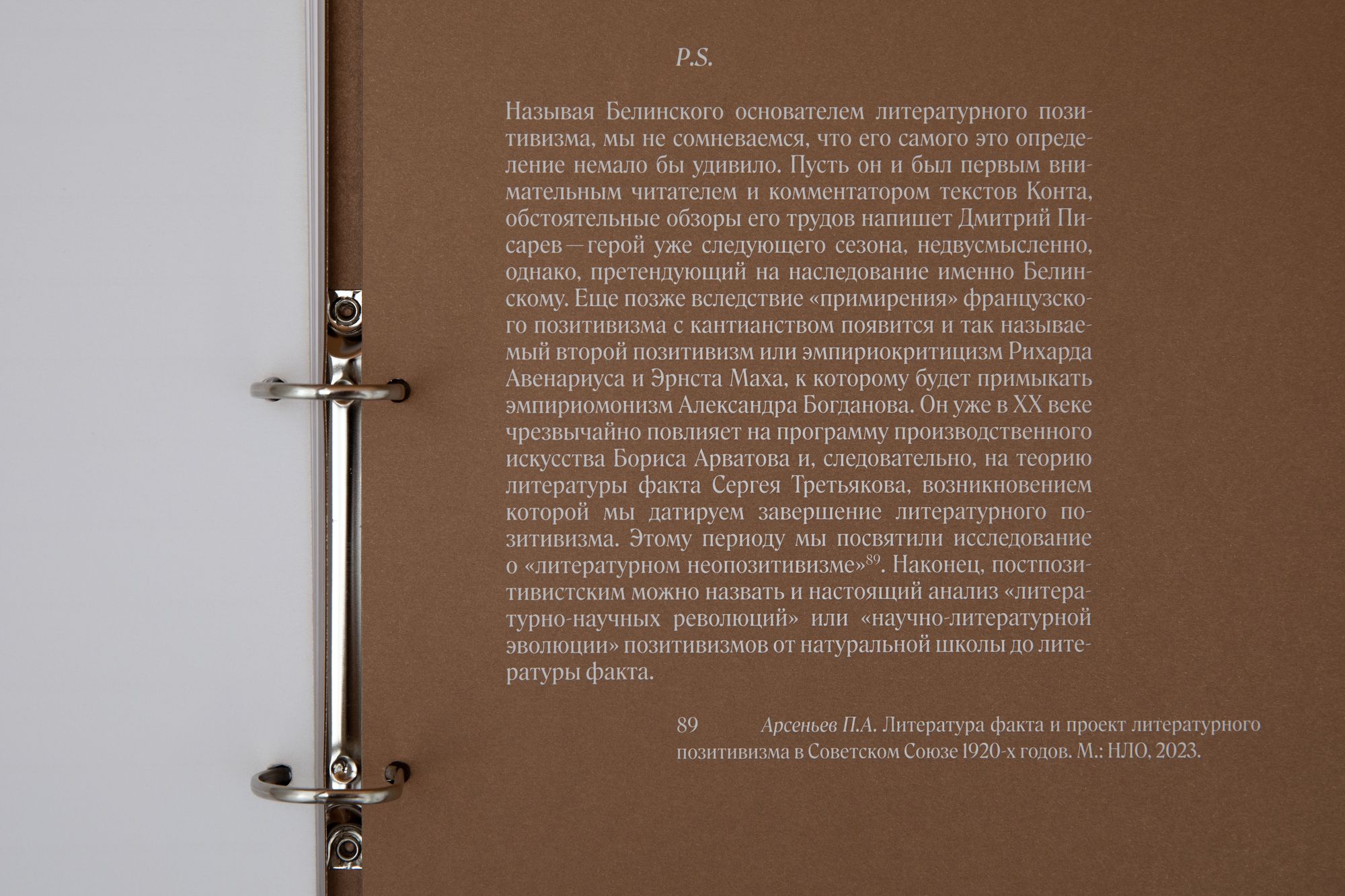
In constructing his own “third path” between Classicism and Romanticism, and drawing in many respects on Hegel, Belinsky struggles to arrive at a positive definition of the new art—one that reconciles “the richness of its Romantic content with the plasticity of Classical form.” What Belinsky calls an “age of reconciliation,” however, gives rise to one of the most militant forms of literary writing, later known as “critical realism.” Reconciliation thus turns into a radical break with the preceding tradition and the establishment of a new one.
The dawn of literary positivism, the theme of the first season, is explored across four chapters, which, like issues of Otechestvennye Zapiski, will be published as separate “booklets.”
The first of these booklets considers the philosophical influences on the thought of Vissarion Belinsky, the founder of the Natural School and a key figure in literary and social criticism. A particularly important factor in Belinsky’s intellectual development was the fact that this leading nineteenth-century Russian critic did not know the languages of Hegel and Schelling, and therefore relied on free translations and informal retellings of the works of German thinkers.
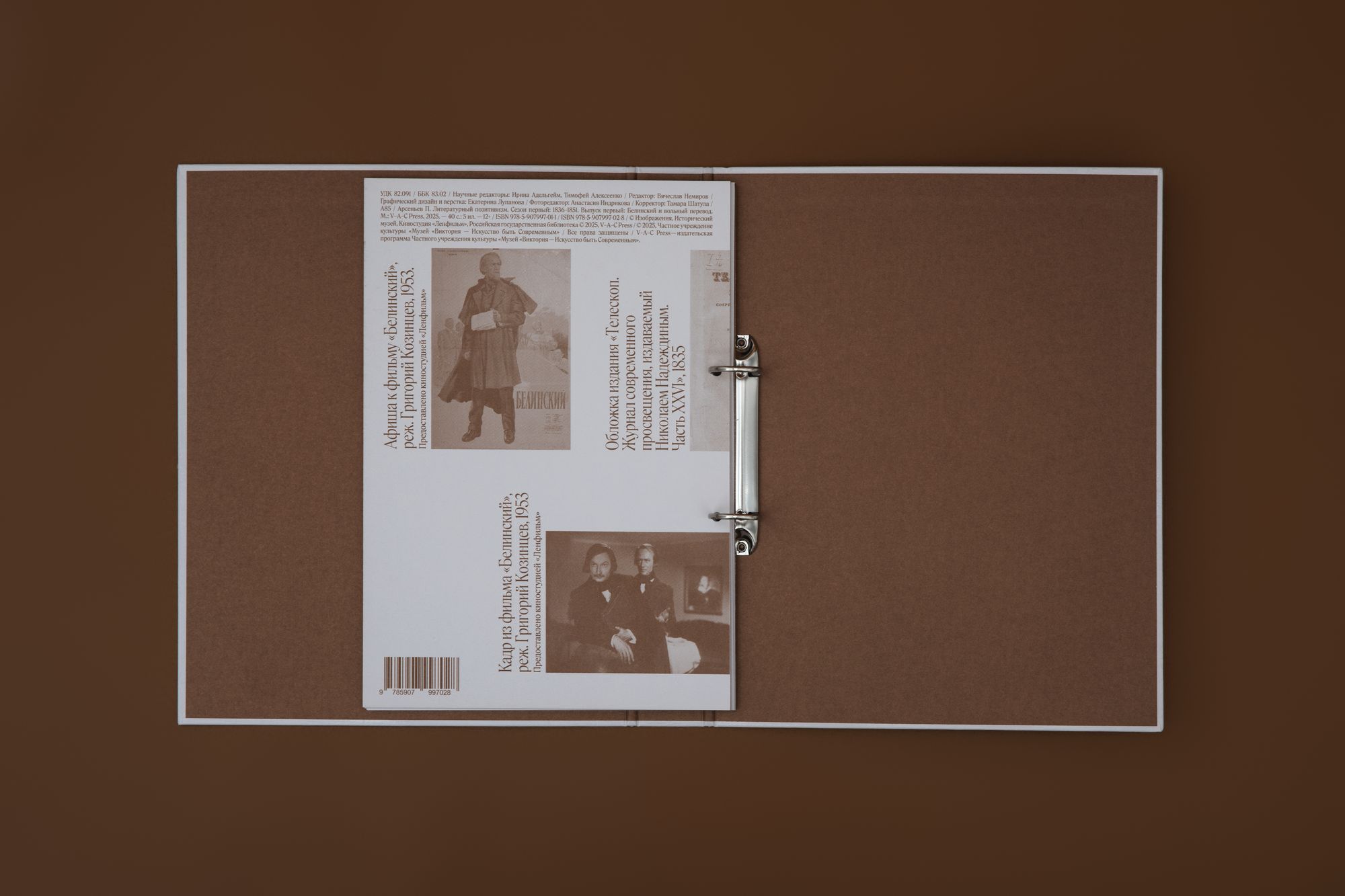
Scientific Editors
Irina Adelheim
Timofey Alekseenko
Editor
Vyacheslav Nemirov
Proofreader
Tamara Shatula
Design and Layout
Ekaterina Lupanova
Photo Editor
Anastasia Indrikova