Katherine Hayles.
How We Became Posthuman: Virtual Bodies in Cybernetics, Literature, and Informatics
A study of how information technologies reshaped our understanding of the body, consciousness, and subjectivity in the twentieth century.
In How We Became Posthuman, American philosopher and literary theorist Katherine Hayles traces how—through cybernetics, artificial-life research, and science fiction—the concept of “information” gradually displaced embodiment from prevailing models of the human over the course of the twentieth century. By examining shifts in technological paradigms, Hayles demonstrates how the information age fostered the illusion of a subject detached from environment and corporeality.
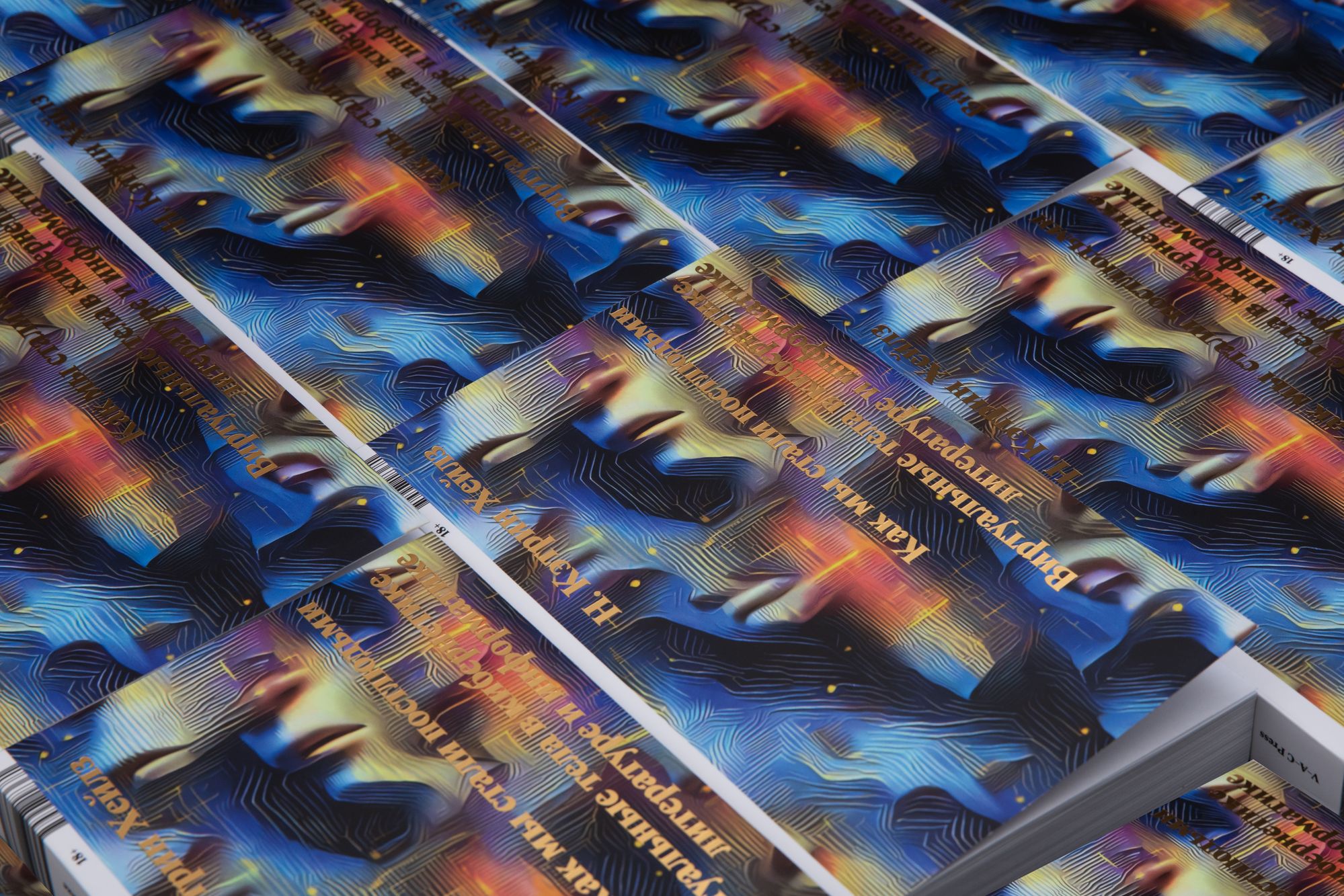
Photo: Ruslan Shavaleev
Katherine Hayles (b. 1943) is an American literary critic and theorist known for her work at the intersection of literature, science, and technology. She holds a master’s degree in Chemistry from the California Institute of Technology and a PhD in English Literature from the University of Rochester. She has taught at the University of Iowa, the University of California, and other institutions. She is currently Research Professor at the University of California, Los Angeles.
If my nightmare is a culture of posthumans who regard bodies as fashion accessories rather than the ground of being, my dream is a posthuman who gladly embraces the possibilities of information technologies but does not succumb to fantasies of unlimited power or disembodied immortality—one who accepts finitude as a condition of human existence and understands that human life is embedded in a highly complex material world on which our survival depends.
— Katherine Hayles, from “Toward Embodied Virtuality”
Posing the question of how to conceptualise consciousness in an age of virtuality, the author develops an alternative notion of the “posthuman.” For Hayles, posthuman existence is not reducible to the fantasy of uploading consciousness somewhere else; rather, it presupposes a dynamic interrelation between humans and intelligent machines. In this view, the posthuman is not the apocalyptic spectre feared by many contemporary thinkers, but a new mode of being—one no longer autonomous or individualized, but intrinsically intertwined with cybernetic systems.
Hayles’s study is founded on interviews with scientists, archival research on the history of cybernetics, and close readings of cultural and artistic texts concerned with information technologies.
Managing Editor
Karen Sarkisov
Editor
Stanislav Naranovich
Translation from English
Dmitry Kralechkin
Design
Lyosha Kritsuk