Alois Riegl.
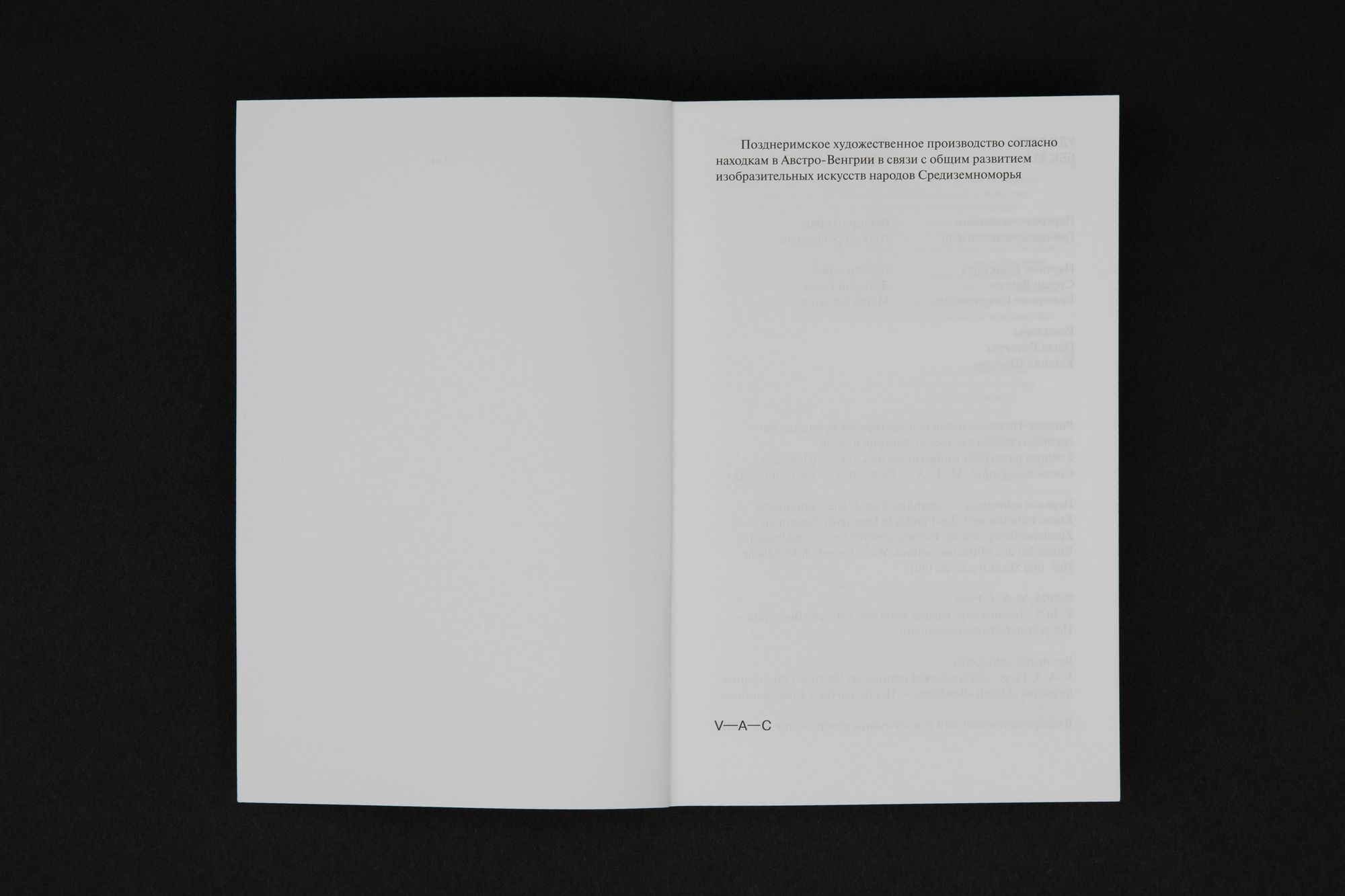
Late Roman Art Industry
A foundational work by the renowned representative of the Vienna School of Art History on the role of Late Antiquity in the history of art.
In Late Roman Art Industry, Alois Riegl persuasively demonstrates that Late Antiquity was not a period of classical decline but a fully autonomous artistic epoch governed by its own laws. What had been seen as the lifeless “crystallism” of symmetrical, seemingly static forms in fact reflected a transition to a new mode of vision and artists’ attempts to imagine and represent the infinity of space.

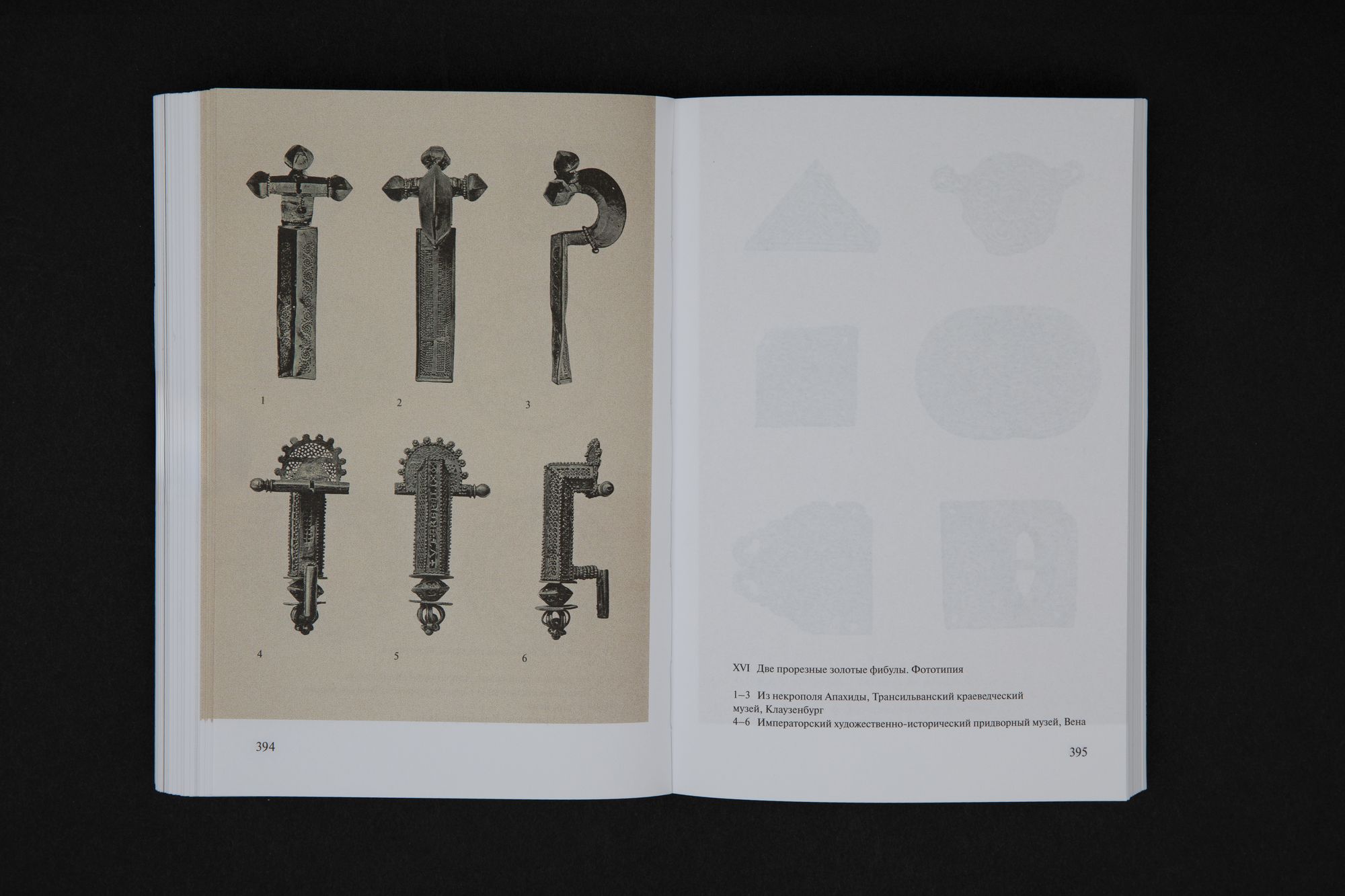
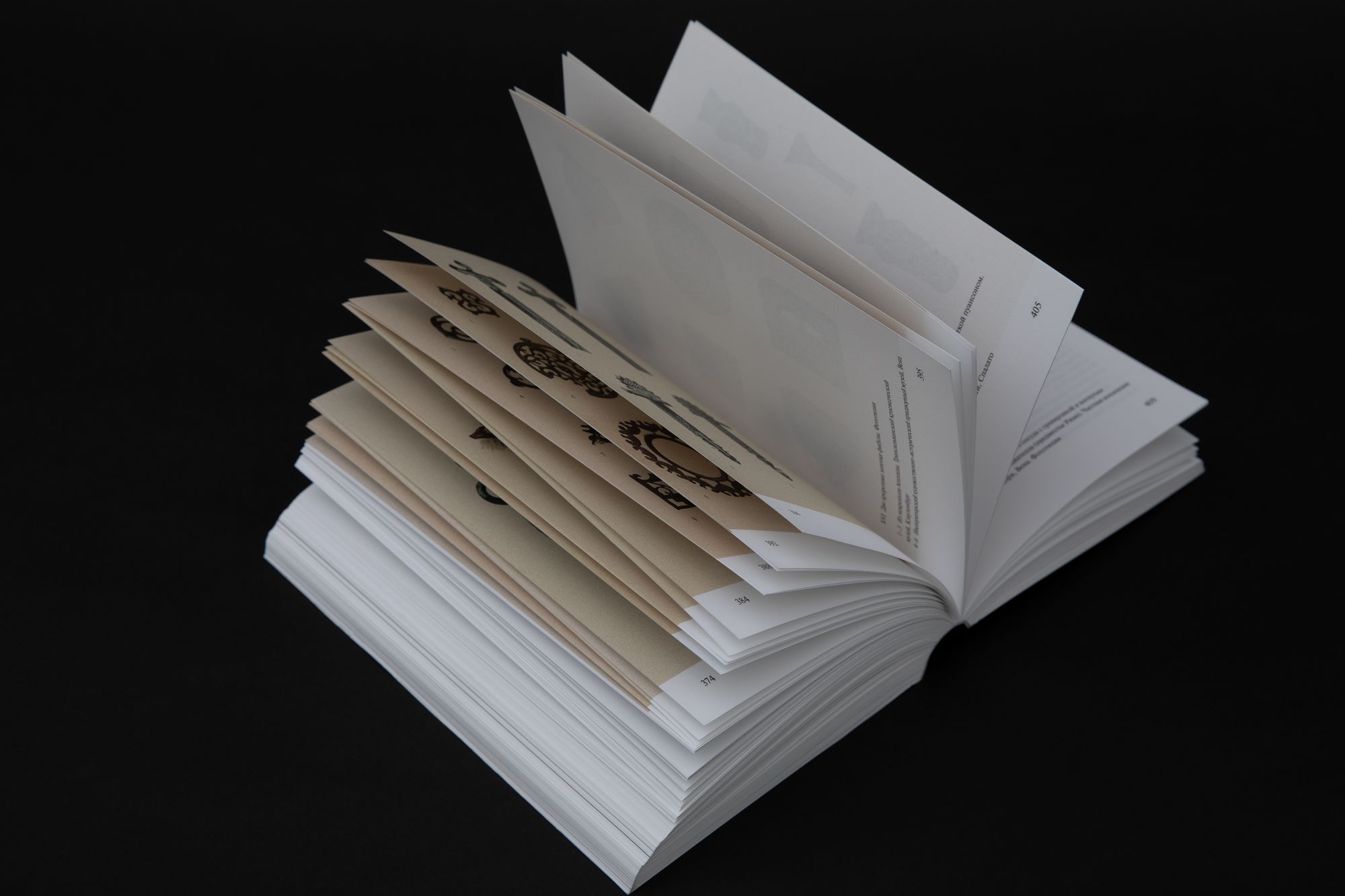
All photos: Ruslan Shavaleev
Alois Riegl (1858–1905) was a historian, art theorist, restorer, leading figure of the Vienna School of Art History, and an advocate of formalism in art. He championed the recognition of art history as an academic discipline.
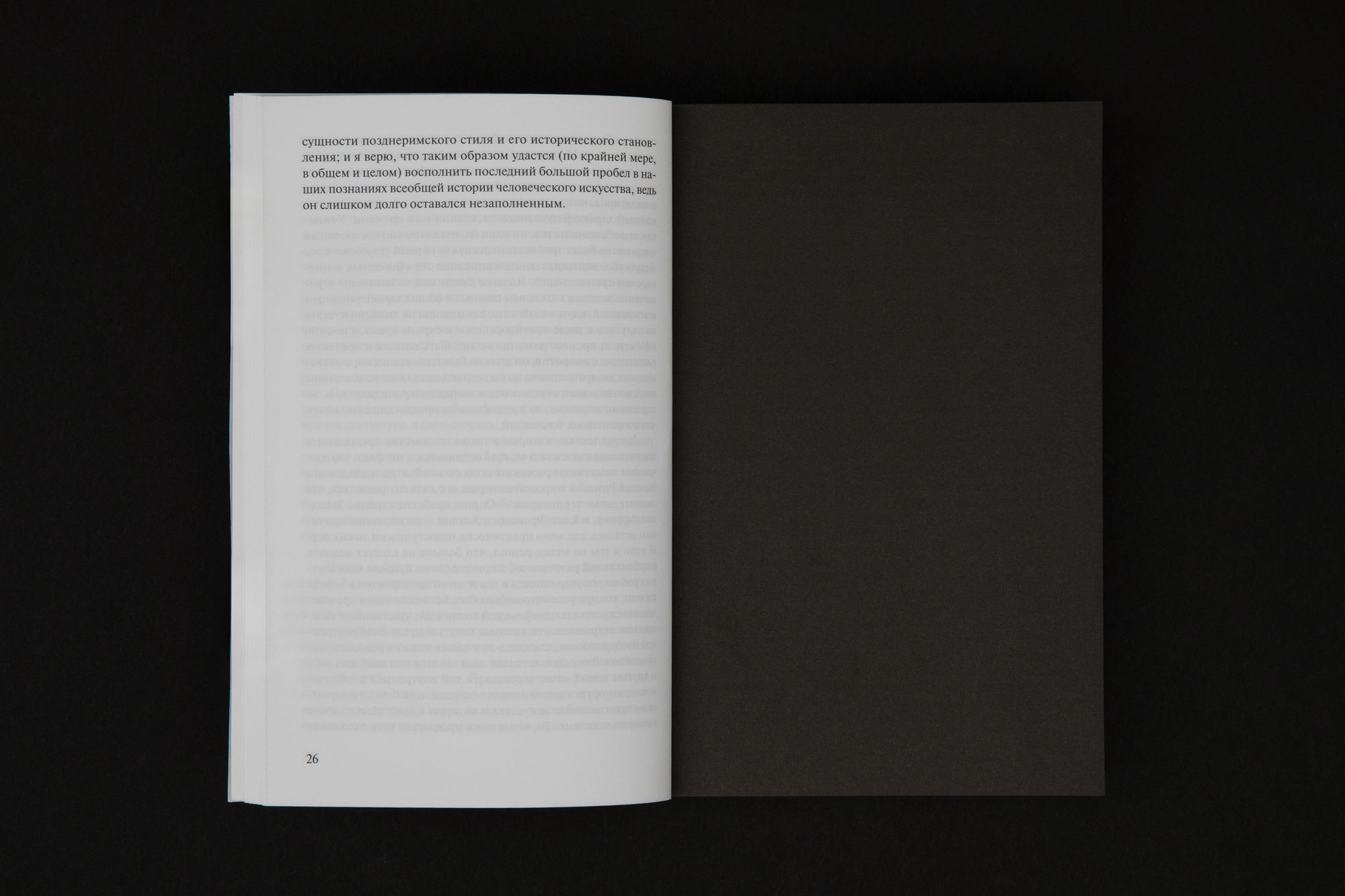
...In this work we shall demonstrate that even the Vienna Genesis, in relation to the art of the Flavian and Trajanic periods, when considered within the framework of the universal development of art, represents progress, and progress alone—and that it is only from the narrow perspective of contemporary criticism that it appears as decline, a phenomenon that in history does not truly exist. More than that: the new art, with all its merits, would not have been possible had Late Roman art, with its non-classical tendencies, not paved the way for it.
At the center of Riegl’s theoretical system is the supra-individual principle of Kunstwollen—“artistic will”—which he regards as the true driving force of historical transformations in art. It is Kunstwollen, and not political or social factors, that shapes the style of an epoch—determining both its way of seeing and its way of representing. Accordingly, Riegl is less concerned with isolated masterpieces than with mass production.
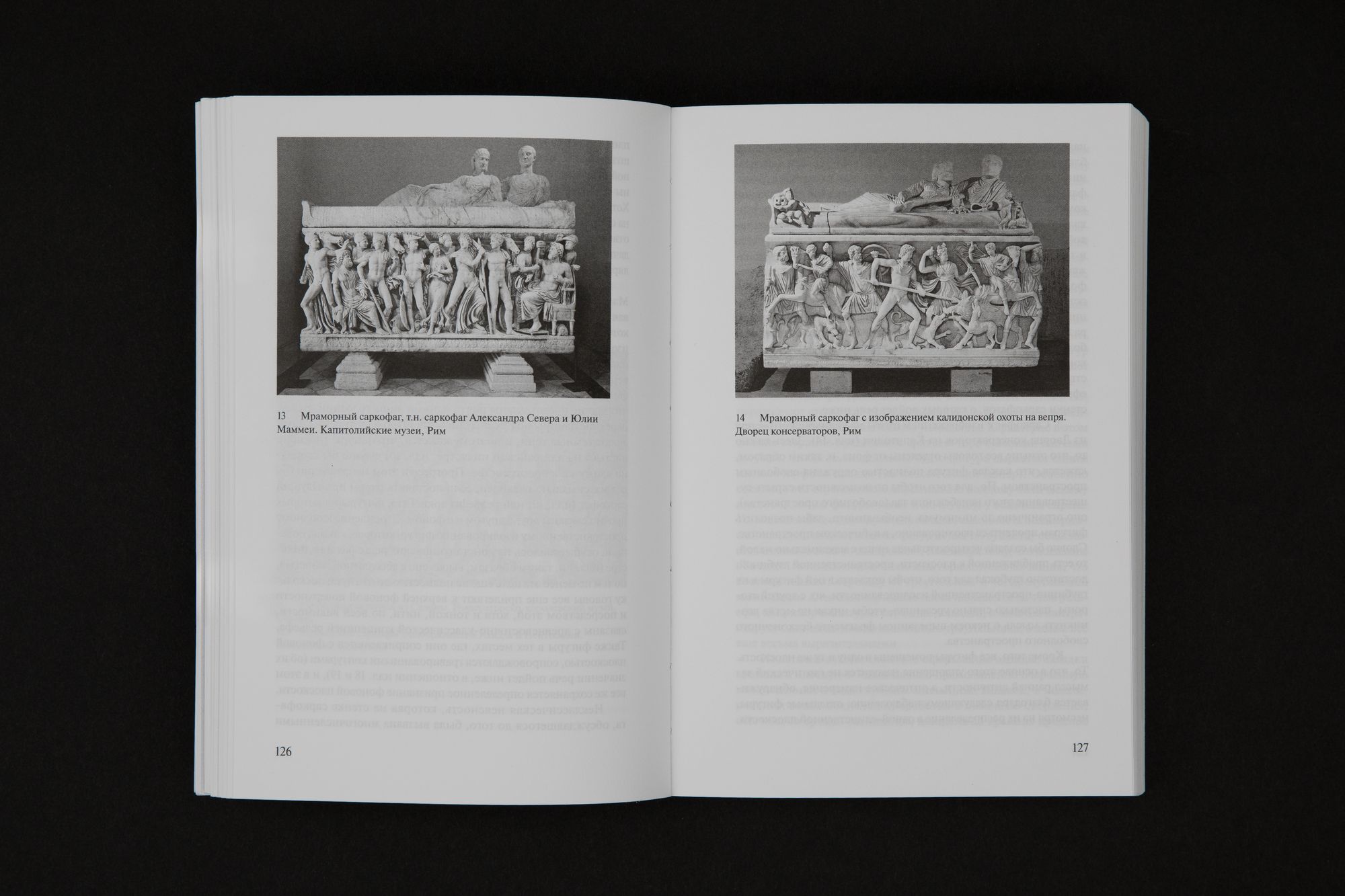
Through concrete examples—ranging from monumental architecture to fibulae—Riegl argues that classical art was fundamentally haptic, intended to be apprehended from up close, whereas Late Antique art was optical, oriented toward a gaze from afar. Riegl’s final chapter turns to a consideration of how Late Roman Kunstwollen is theoretically assessed in the writings of St. Augustine. Riegl’s style is remarkable: it combines meticulous, monument-by-monument description in the best tradition of German scholarship with passionate polemics and sharp, ironic sallies against academic adversaries.
The Russian edition of Riegl’s work has provoked equally lively debate over the complexity of Riegl’s language and conceptual system. Translator Grigory Gimelstein and editor Stepan Vaneyan, one of Russia’s leading Riegl scholars, diverge significantly in their interpretation of Kunstwollen: Gimelstein retains the established Russian rendering, “khudozhestvennaya volya” (“artistic will”), while Vaneyan appeals to the history of philosophy to propose the alternative “khudozhestvennoe volenie” (“artistic volition”). Thus, this volume is not only a reissue of a classic text but a document of living scholarship, in which Riegl’s foundational treatise is accompanied by critical debate and a scholarly commentary by series editor Ilya Doronchenkov.
Translated from German by
Grigory Gimelstein
Series editor
Ilya Doronchenkov
Scientific editors
Stepan Vaneyan
Ekaterina Ilyushchechkina
Series design
Dmitry Gusev
Misha Filatov
Editors
Olga Grinkrug
Evgeniya Shestova